
Clean power
Sites planned around lower-impact energy infrastructure and long-term resilience.
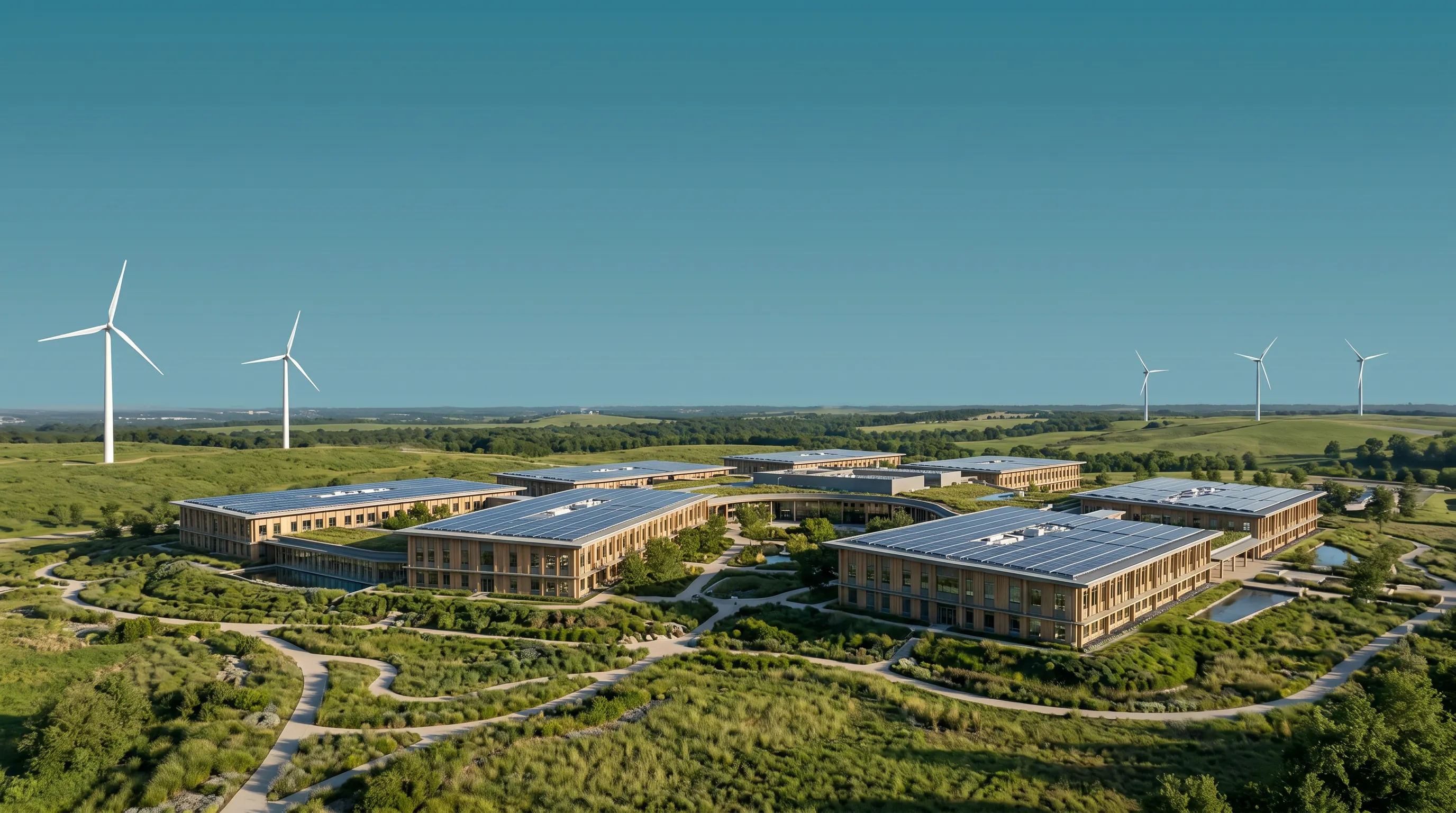
Our sustainable data center standards translate environmental and community responsibility into decisions that can be evaluated—from site selection and design through commissioning and operation.
Sites planned around lower-impact energy infrastructure and long-term resilience.

Efficient systems considered as part of the campus—not added as an afterthought.

Landscape and community context treated as core infrastructure decisions.
Sustainability is not one technology or one score. It is a management discipline.
Understand local conditions, establish a baseline, design for lower impact, measure performance, and improve over time. Recognized frameworks can guide the work without implying that a project holds a certification.
Reduce avoidable demand across IT, power distribution, air management, controls, and commissioning before addressing supply.
Energy baselines · PUE · continual improvement
Compare cooling architectures as connected choices affecting energy, water, sound, maintenance, climate fit, and resilience.
Thermal conditions · heat rejection · system tradeoffs
Evaluate data center water usage as a local resource question, matching cooling choices to watershed conditions, competing community needs, climate, water quality, and operational resilience.
Metered use · WUE · energy-water tradeoffs
Account for operational energy, backup generation, refrigerants, construction materials, and other material emissions sources.
CUE · Scope 1, 2, and material Scope 3 sources
Evaluate disturbance, habitat, stormwater, flood and heat risk, transportation, utilities, and nearby land uses before design advances.
Sensitive areas · runoff · native landscape · buffers
Consider embodied carbon, durability, responsible sourcing, construction waste, adaptability, and end-of-life pathways.
Lower material demand · longer service life · recovery
Use baselines for traffic, sound, nearby land uses, and other local conditions to shape siting, setbacks, operations, and project criteria.
Local requirements · sensitive receptors · response
Design for actual site hazards and service requirements while evaluating the energy, water, material, and emissions cost of redundancy.
Commissioning · monitoring · maintainability
Effective mitigation begins before equipment is ordered.
Data center noise can come from cooling equipment, fans, transformers, generators, vehicle movement, and construction; each source requires project-specific acoustic review.
Document daytime and nighttime acoustic conditions near homes and other sensitive receptors.
Model outdoor sound propagation and review tonal, impulsive, and low-frequency characteristics.
Reduce sound through layout, setbacks, orientation, enclosures, barriers, silencers, low-noise equipment, and vibration isolation.
Plan generator testing, deliveries, maintenance, and construction activity to limit avoidable disruption.
Evaluate normal operation, testing, maintenance, and credible worst-case operating conditions.
Verify performance after commissioning and respond to concerns with measurement, investigation, and corrective action.
ISO 1996 defines methods for environmental noise assessment but does not set a universal limit. Each project must meet applicable local requirements and account for the character of the surrounding community. The standard is to design sound out early, verify the result, and remain accountable after operations begin.
Establish credible baselines for energy, water, ecology, traffic, and sound before setting project targets.
Define measurable requirements, calculation boundaries, responsibilities, and the evidence needed for verification.
Evaluate alternatives as connected systems across energy, water, sound, materials, maintenance, resilience, and community context.
Test controls, meter significant resource use, verify acoustic performance where required, document findings, and resolve deficiencies.
Use consistent operating data to identify drift, prioritize improvements, and communicate material results with appropriate context.
Credible claims need a defined boundary, a measurement method, a time period, and evidence. We will not treat a design intention as an operating result or a project-specific certification as a portfolio-wide claim.


Tell us what you are planning and where. We will start with the environmental, infrastructure, acoustic, and community conditions that should shape the work.