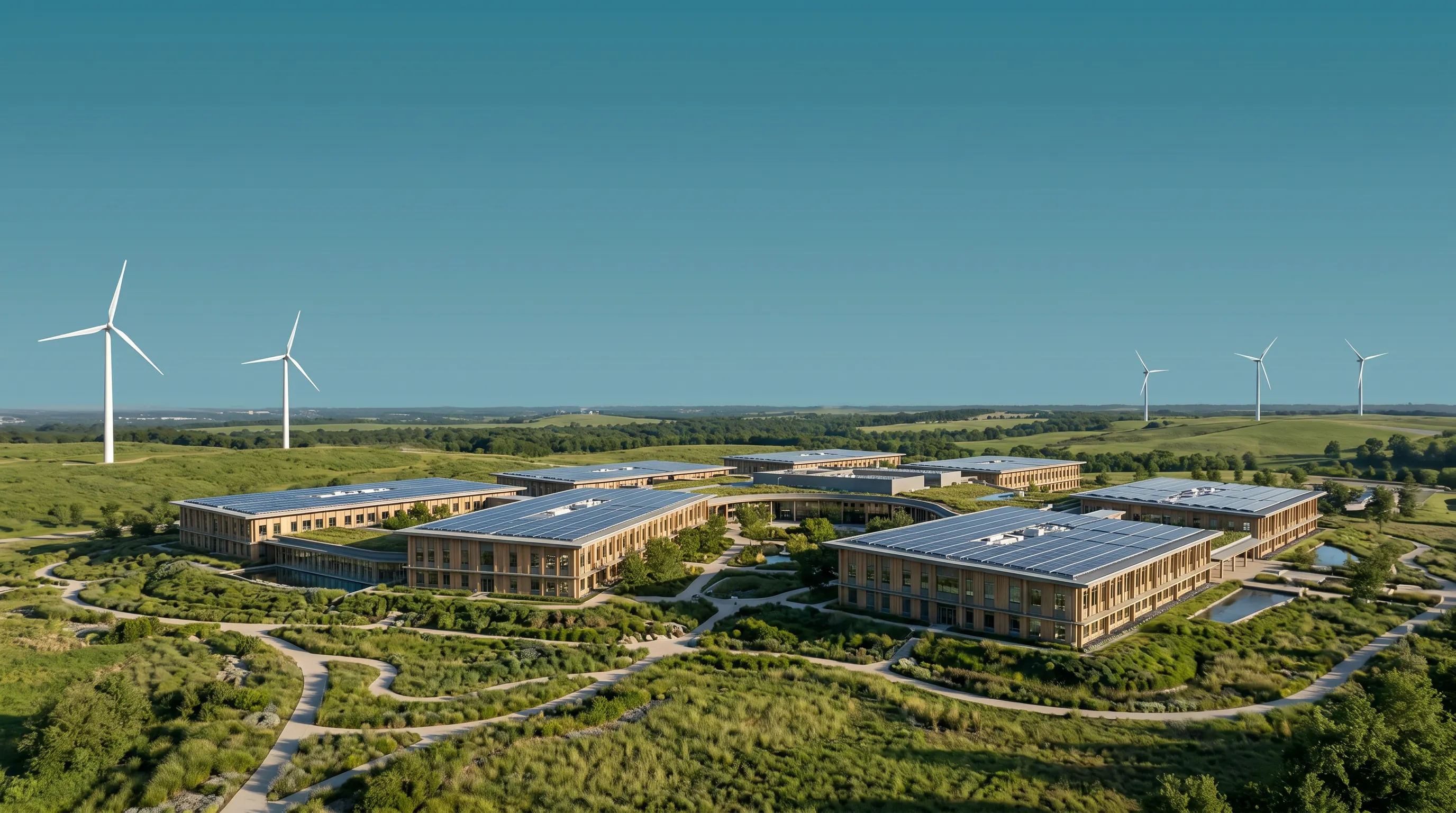
Data center cooling and water infrastructure designed for site-specific conditions

Data center water usage depends on the whole system.

Measure sources, cooling tradeoffs, peak demand, wastewater, WUE, and operating conditions—not one universal number.

There is no reliable universal number for how much water a data center uses.

Demand changes with facility size, IT load, server efficiency, utilization, cooling technology, climate, operating conditions, water source, and the electricity supplying the site. Communities should request average and peak use, direct and indirect water impacts, full-buildout scenarios, and a monitoring plan.

Return to the Resource Center

Measure more than an annual total.

A credible water plan distinguishes withdrawal from consumption, identifies the source, characterizes wastewater, accounts for direct and indirect use, and evaluates both the first phase and maximum planned buildout.

Ask the developerHow much water will the full project use?Request this evidenceMonthly average and peak-day estimates by phase and operating scenario.A credible response containsAssumptions for IT load, weather, cooling mode, utilization, and maximum planned buildout.
Ask the developerWhere will it come from?Request this evidenceSource, utility capacity confirmation, rights or permits, and alternative-supply analysis.A credible response containsEffects on existing users, drought conditions, treatment needs, and infrastructure timing.
Ask the developerHow efficient is the design?Request this evidenceWUE estimate plus energy and workload context.A credible response containsDesign and expected operating ranges, not one unsupported target.
Ask the developerWhat leaves the site?Request this evidenceWater balance and wastewater characterization.A credible response containsEvaporation, blowdown, discharge volume, chemistry, temperature, and treatment path.
Ask the developerWhat happens during scarcity?Request this evidenceDrought and curtailment operating plan.A credible response containsTriggers, reduced-water modes, communication, and enforceable responsibilities.
Ask the developerHow will actual use be known?Request this evidenceMetering, commissioning, reporting, and corrective-action plan.A credible response containsMeter locations, reporting frequency, public fields, responsible party, and response to variance.

The Good Neighbor Data standard.

Evaluate water as a local resource question. Establish the source and watershed context before choosing a cooling strategy; compare water, energy, carbon, cost, and reliability together; meter meaningful uses; commission the system; and report performance against the assumptions used during review.

Frequently asked questions.

Do data centers use drinking water?

Some do; others use reclaimed water, groundwater, surface water, or minimal routine water for cooling. The source depends on local infrastructure, water quality, cooling design, and regulation. A project should identify the proposed source and alternatives before approval.

Does closed-loop cooling use water?

A closed loop recirculates fluid within part of the cooling system, reducing replacement in that loop. The complete facility may still consume water through evaporative heat rejection, blowdown, humidification, maintenance, or other uses. Ask for a full water balance.

Is lower WUE always better?

Lower on-site WUE generally means less on-site water per unit of IT energy, but it does not capture every impact. A lower-water design can use more electricity, and that electricity can carry indirect water and carbon effects. Compare WUE with PUE, energy source, climate, workload, and watershed conditions.

What should be reported after opening?

At minimum: total and peak water use, source, WUE with its calculation boundary, wastewater volume, material changes in cooling mode, and performance against project commitments. Reporting should distinguish estimates from metered results.

Bring the project context.

Discuss a project