GPU owner and cloud operator
Procures and operates accelerators, networking, storage, software, and customer access to the compute service.
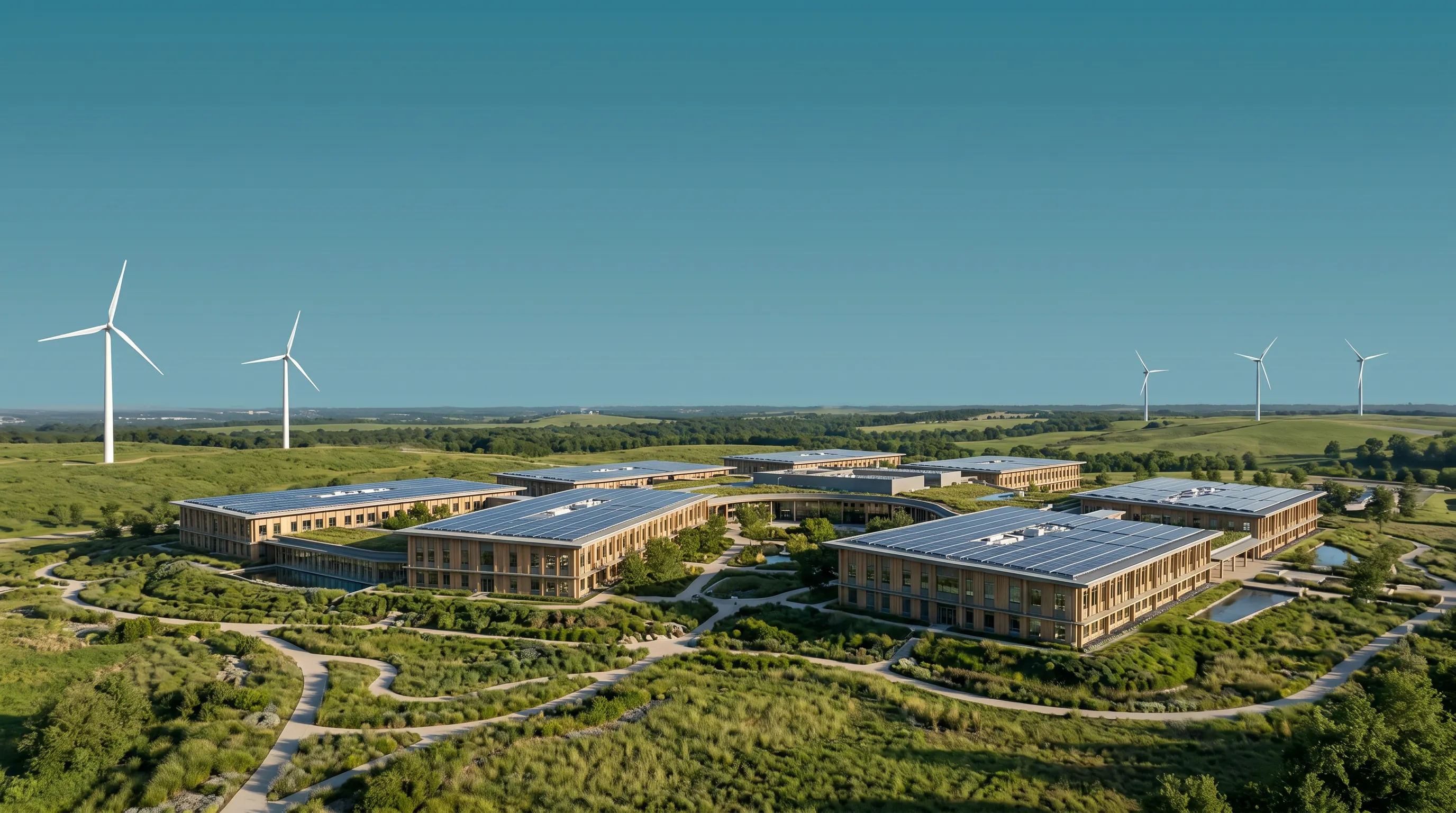
Compare Fluidstack, Crusoe, and Lambda—and identify who controls the land, power, financing, buildings, cooling, GPUs, and long-term obligations.
A neocloud connects demand for AI compute to the physical systems required to deliver it.
Depending on the project, it may be the GPU owner, cloud operator, anchor tenant, developer, facility operator, power buyer, or several at once. The company announced publicly may not own the property, borrow the construction capital, sign the utility agreement, or carry future expansion obligations.
Use the planning checklistNeoclouds can accelerate buildout by coordinating customers, chips, capital, power, construction, networking, and operations. That flexibility can also obscure accountability. Ask what each named entity is contractually responsible for at the specific site.
Procures and operates accelerators, networking, storage, software, and customer access to the compute service.
Commits to long-term space and power, helping the facility owner finance construction against contracted demand.
Controls land, permits, design, construction, commissioning, maintenance, emergency systems, and campus operations.
Secures utility service, generation, substations, fuel, or power agreements—and may carry or guarantee minimum obligations.
The company category does not determine the project structure. Document the role each organization holds at the specific site.
| Dimension | Fluidstack | Crusoe | Lambda |
|---|---|---|---|
| DimensionCore role | FluidstackAI infrastructure orchestrator and cloud operator. | CrusoeVertically integrated AI data center developer, energy coordinator, operator, and cloud provider. | LambdaAI compute integrator, cloud operator, and frequently an anchor tenant. |
| DimensionTypical facility model | FluidstackCustom projects combining infrastructure partners, project companies, and long-term leases. | CrusoeGreenfield campuses and modular facilities developed and operated with capital partners. | LambdaLeased colocation, build-to-suit partner facilities, and selective redevelopment of existing sites. |
| DimensionBuildout contribution | FluidstackAcquires or coordinates power and can design, build, equip, and operate facilities for major AI customers. | CrusoeCoordinates site, power, financing, design, construction, cooling, operations, and cloud service. | LambdaSpecifies dense compute requirements and operates GPU systems; partners often deliver buildings, permits, power, and cooling. |
| DimensionCapital structure | FluidstackProject joint ventures, secured financing, long leases, and third-party guarantees can support buildout. | CrusoeLarge joint ventures with infrastructure investors and lenders fund capital-intensive campuses. | LambdaCorporate and asset financing supports GPUs and capacity; leases and partner developments reduce direct facility ownership. |
| DimensionPower and site strategy | FluidstackPrioritizes rapid access to large power blocks across multiple partners and markets. | CrusoeEnergy-first site selection and dedicated or on-site power strategies are central to the model. | LambdaPrioritizes speed-to-compute through powered shells, colocation, build-to-suit capacity, and brownfield reuse. |
| DimensionVerify locally | FluidstackProject-company ownership, guarantees, power source, operator obligations, and anchor-contract changes. | CrusoeFull-buildout generation, fuel use, water and air impacts, financing parties, and operating responsibility. | LambdaFacility-owner responsibilities, utility account holder, retrofit scope, cooling, lease term, and expansion rights. |
Roles vary by project. These are documented patterns, not a universal structure for every facility.
Fluidstack, Crusoe, and Lambda all sell AI compute, but documented projects show different ways of dividing long-lived real estate and power risk from fast-changing GPU and customer risk.
Fluidstack began as a platform for distributed GPU capacity and now describes itself as acquiring power, designing and building data centers, and operating them. Anthropic selected it for a planned $50 billion U.S. infrastructure program beginning with custom facilities in Texas and New York.Role in buildout: Fluidstack converts an AI customer’s compute commitment into a financeable infrastructure project. It can aggregate demand, coordinate power, define technical requirements, contract for a campus, install the compute platform, and operate the service.Different approach: The model is flexible and partnership-heavy. An Indiana project reported by Data Center Dynamics uses a joint venture, secured debt, a long-term Fluidstack lease, a Google guarantee, utility power, and an on-site substation. Public review must map every project entity and guarantee—not rely on the Fluidstack name alone.
Crusoe reaches further into the physical campus. Its Abilene, Texas project is being developed through a joint venture with Blue Owl Capital and Primary Digital Infrastructure, with Crusoe coordinating a planned 1.2 GW, eight-building campus.Role in buildout: Crusoe can act as campus developer and long-term operator while also supplying AI cloud service. It coordinates land, power strategy, capital, building design, high-density cooling, construction, and operations.Different approach: Energy and facility design are coordinated as one system. Crusoe says Abilene connects to ERCOT, uses natural-gas turbines for backup and reliability, and uses direct-to-chip liquid cooling with closed-loop, non-evaporative heat rejection. That integration makes generation, air permits, fuel assumptions, water methodology, financing, and full-buildout impacts central review issues.
Lambda’s historical strength is the AI compute layer: GPU systems, clusters, orchestration, and cloud access. Its expansion frequently uses specialist facility partners. Prime Data Centers owns the LAX01 facility where Lambda is taking 21 MW, while EdgeConneX is developing a 23 MW single-tenant Chicago facility and has designed or operated other Lambda sites.Role in buildout: Lambda translates customer demand into rack density, cooling, networking, storage, GPU systems, and operations. A partner may own and deliver the building while Lambda equips it and sells the compute service.Different approach: Lambda is the most modular and facility-partner-led of the three, but it can also redevelop a site. In Kansas City, it announced plans to develop and operate an existing facility as sole tenant, initially at 24 MW with a stated path beyond 100 MW. Communities must separate the cloud operator from the facility owner and identify who controls permits, utilities, cooling, emergency systems, and end-of-term obligations.
AI data centers combine two businesses with different timelines and risks: long-lived land, power, and buildings; and rapidly changing accelerators, networks, software, and customer demand.
Its value is turning large compute demand into projects across land, power, facility, financing, hardware, and customer partners.
Its value is coordinating energy, facility development, cooling, operations, and cloud service under one infrastructure strategy.
Its value is deploying and operating AI systems while facility partners or existing powered assets accelerate entry into a market.
Map the full chain from land and power to buildings, GPUs, cloud service, customer contracts, and long-term operation. Every material obligation needs a named party and a method for verification.
| Ask the developer | Request this evidence | A credible response contains |
|---|---|---|
| Ask the developerWho owns each asset? | Request this evidenceEntity chart covering land, buildings, substation, generation, cooling plant, and GPUs. | A credible response containsLegal names, ownership percentages, lenders, lease boundaries, transfer rights, and the operator for each asset. |
| Ask the developerWho carries the power obligation? | Request this evidenceUtility agreements, tariffs, guarantees, and supply contracts. | A credible response containsAccount holder, guarantor, full-buildout demand, ramp schedule, upgrade costs, minimum payments, and exit treatment. |
| Ask the developerWhat role does the neocloud hold? | Request this evidenceDevelopment, lease, operations, and customer agreements. | A credible response containsClear separation of developer, tenant, facility operator, cloud operator, reseller, and corrective-action responsibility. |
| Ask the developerWhat is the complete buildout? | Request this evidenceMaster plan, phased capacity schedule, and contractual expansion rights. | A credible response containsInitial and ultimate megawatts, acreage, buildings, generation, water, schedule, dependencies, and expiration conditions. |
| Ask the developerHow will heat be rejected? | Request this evidenceCooling narrative, water balance, peak-day model, and maintenance plan. | A credible response containsDirect and indirect water, heat-rejection method, annual and peak use, discharge, treatment, climate assumptions, and metering. |
| Ask the developerHow will on-site generation operate? | Request this evidenceAir permits, dispatch assumptions, fuel contracts, and operating scenarios. | A credible response containsBackup, bridge, or normal-supply role; annual hours; emissions; sound; testing; outage conditions; and retirement triggers. |
| Ask the developerWhat if the anchor contract changes? | Request this evidenceLease guarantees, termination rights, step-in rights, and decommissioning security. | A credible response containsNamed party for debt, unfinished work, utility commitments, site restoration, equipment removal, and continued reporting. |
| Ask the developerWho verifies performance? | Request this evidenceCommissioning, metering, monitoring, and public reporting plan. | A credible response containsMeter boundaries, responsible party, reporting cadence, comparison with approval assumptions, variance review, and correction. |
No model is automatically more responsible. Identify every project company and contract role; evaluate the full buildout; assign power, infrastructure, environmental, financial, operating, and exit obligations to named parties; then commission, meter, and report performance against the approval record. Use the broader community-impact guide, grid-impact guide, and water-use guide to test the underlying project.
Sometimes. Crusoe regularly acts as a developer and operator. Fluidstack increasingly coordinates or participates in custom development through project partners and long-term leases. Lambda commonly deploys inside facilities delivered by specialist developers, although it can also redevelop and operate a site itself.
Ownership varies. A facility may be owned by a joint venture, infrastructure fund, colocation company, real-estate developer, or project subsidiary while the neocloud leases power and space. Ownership, operation, financing, and cloud service should be documented separately.
Neoclouds focus on GPU-dense training and inference. They can provide specialized networking, cooling, orchestration, and large dedicated clusters without requiring the customer to assemble every layer. That specialization also exposes them to capital, customer-concentration, chip-cycle, and power-availability risks.
The company category does not answer that. Impact depends on site conditions, power supply, generation, cooling, water, construction, tax agreements, grid upgrades, noise, emergency operations, and enforceable reporting commitments.
Last updated July 2026. Review technical and policy information for the specific site, jurisdiction, utility territory, and operating plan.