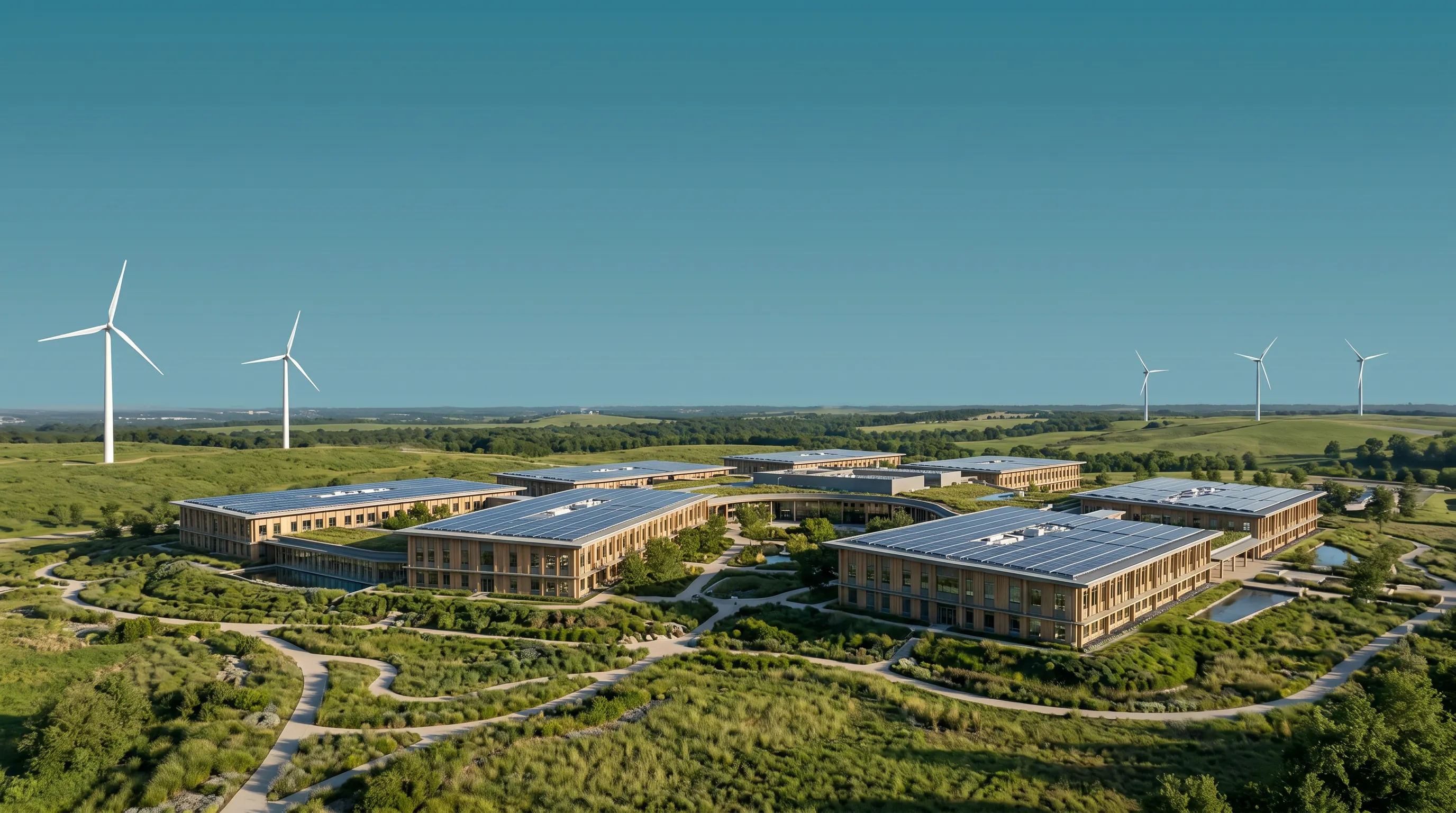
Digital demand is growing. The infrastructure behind it has to grow, too.
Cloud services, streaming, communications, research, business systems, and artificial intelligence all depend on physical data centers. The U.S. Department of Energy reported that data centers used about 4.4% of U.S. electricity in 2023. A 2026 Berkeley Lab update estimates that the share could reach 11.8% by 2030, with scenarios ranging from 9.5% to 15.3%.
That growth is real. So is the public response.
Good Neighbor Data’s U.S. Data Center Map currently documents 142 active or extended community restrictions and 22 proposed actions in its reviewed public dataset. Local governments are pausing permits, rewriting zoning rules, and demanding clearer answers about electricity, water, noise, land, emergency services, public costs, and long-term accountability.
This is not simply a conflict between technology and opposition to technology. It is a signal that the old development model is failing.
Why communities are applying the brakes
A large data center can arrive on a timeline much shorter than the infrastructure needed to support it. The International Energy Agency notes that new transmission can take four to eight years in advanced economies, while transformer and cable wait times have lengthened. When a large load appears before generation, transmission, substations, water systems, and rate structures are ready, the consequences become local.
Communities are asking practical questions:
- Will residents or small businesses pay for grid upgrades?
- What happens to electricity reliability during peak conditions?
- How much water will the full project use, and where will it come from?
- Will cooling equipment, transformers, and generators create persistent noise?
- How much land and supporting infrastructure will the maximum buildout require?
- What tax revenue, permanent employment, and public benefits will remain after incentives and public costs?
- Who is responsible when actual performance differs from the assumptions used during approval?
Recent local ordinances show why moratoria are spreading. Le Sueur County, Minnesota, paused new permits while studying energy demand, water, noise, heat, stormwater, emergency services, land use, taxation, and infrastructure costs. Gates County, North Carolina, similarly concluded that its existing rules lacked the performance standards needed for utility capacity, setbacks, and noise. Other jurisdictions are replacing temporary pauses with conditional-use standards and site-specific review.
The message is not that every data center should be rejected. It is that projects should not be approved before communities can evaluate them.
Watch the Associated Press explainer for a short introduction to how data centers work and why AI is accelerating demand.
The alternative: clean, efficient infrastructure built for its place
A responsible data center is not defined by one renewable-energy contract, one efficiency metric, or one cooling claim. It is a connected system.
The better path begins with five commitments.
Add clean power without shifting risk
Data centers should help bring forward new clean generation, storage, transmission, and grid capacity—not rely on accounting claims while increasing local fossil generation or transferring infrastructure costs to other customers.
The strongest plan connects the project’s hourly demand with credible power supply, interconnection, upgrades, storage, flexibility, backup systems, cost allocation, and operating milestones. It explains what happens during delays and peak grid conditions. It gives utilities and regulators enough evidence to protect reliability and affordability.
Design for lower water use in the actual climate
There is no universal water number and no single cooling system that is best everywhere. Berkeley Lab research found that workload-level water use can vary by more than 10,000-fold across combinations of server efficiency, utilization, electricity supply, cooling technology, infrastructure efficiency, climate, and equipment practices.
That makes site selection and design inseparable. A credible project compares dry, air, liquid, evaporative, hybrid, and reclaimed-water options against energy use, water availability, drought, wastewater, reliability, and full-buildout conditions. It reports both expected and peak demand, then meters actual performance.
Use Good Neighbor Data’s water-usage guide to see the questions a complete water plan should answer.
Start community review before the design is fixed
Community approval is not a public-relations event after major decisions have already been made. It is a development input.
Developers should engage local leaders, utilities, emergency responders, neighbors, landowners, and technical reviewers early enough for the process to change the site plan. Public materials should show the maximum buildout, supporting infrastructure, alternatives, uncertainty, and who pays for each commitment.
The result may be a different site, smaller phase, greater setback, quieter equipment, lower-water design, new infrastructure funding, clearer reporting, or a decision not to build in that location. That is what meaningful review looks like.
Turn promises into measurable obligations
“Efficient,” “sustainable,” and “community-friendly” are not operating plans.
Every material commitment should identify a responsible party, measurement method, reporting schedule, deadline, corrective process, and instrument that survives ownership changes. Communities need to know what will be measured after opening and what happens when performance misses the assumptions used during approval.
Good Neighbor Data’s case-study library profiles facilities with public evidence on water, energy, noise, and community outcomes. The examples are useful because they show what can be documented—and where evidence remains incomplete.
Treat local fit as a core performance requirement
A technically efficient building can still be a poor project if it strains the wrong grid, draws from a stressed water source, conflicts with nearby homes, or leaves public obligations undefined.
Local fit means evaluating power, water, sound, land, transportation, utilities, habitat, emergency services, fiscal effects, and community value as one system. It means comparing alternatives before the most consequential choices become irreversible.
Watch Good Neighbor Data’s 55-second project film for the problem-and-solution overview. Then explore the Project Approach and Sustainability Standards for the measurable framework behind it.
A better outcome is possible
Communities do not have to choose between unlimited development and blanket bans.
Data-center demand can be met with cleaner energy, lower-water design, grid-aware operations, quieter equipment, compatible sites, transparent public review, and enforceable commitments. But those outcomes do not happen automatically. They have to be designed, negotiated, measured, and maintained.
Good Neighbor Data exists to help make that process more visible.

