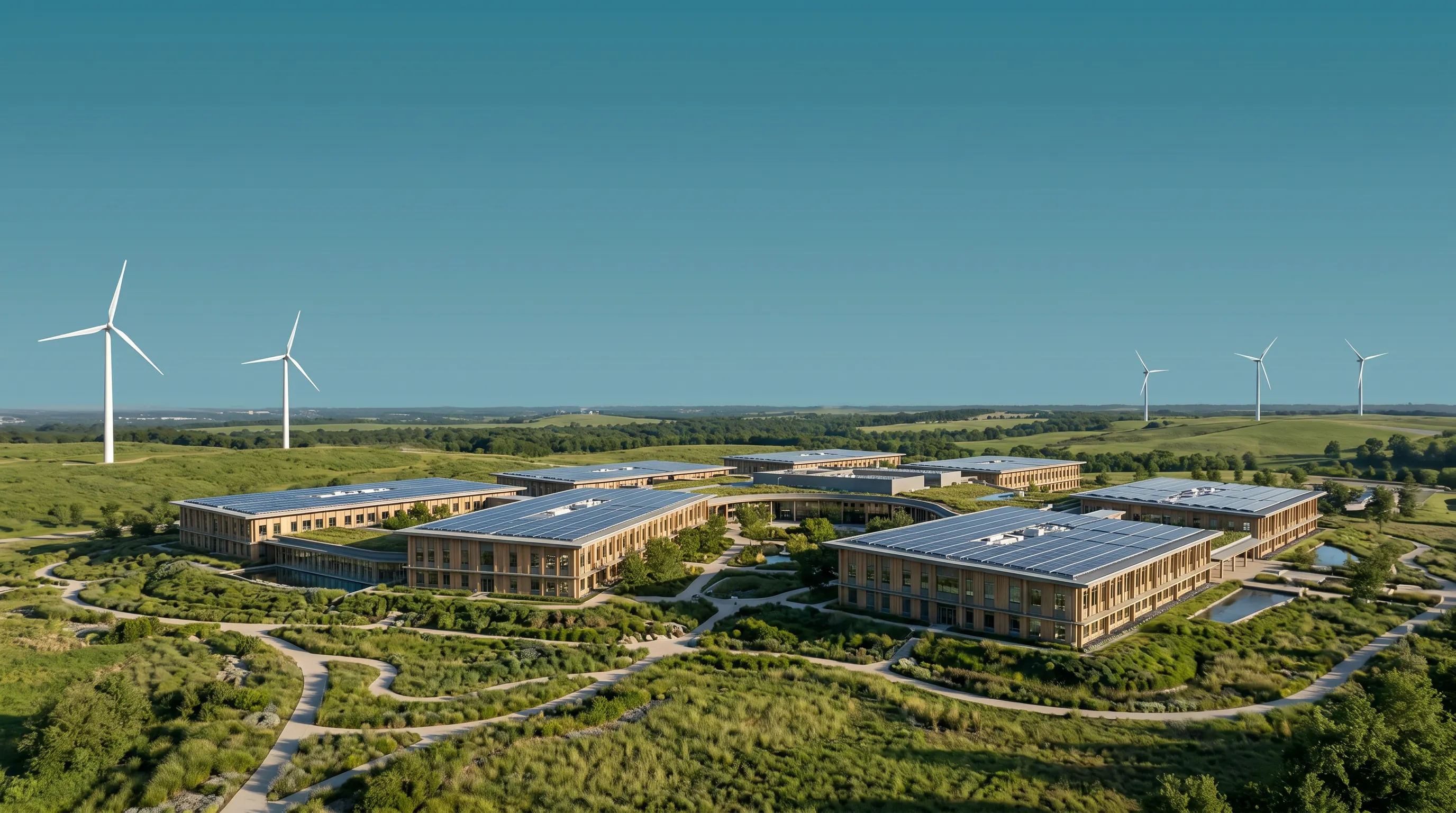
Sustainable data center campus evaluated within its environmental and community context

Data center impact is local—and connected.

Evaluate electricity, water, air, sound, land, infrastructure, public services, and economic commitments as one place-specific system.

Data centers can bring investment, construction work, permanent facility jobs, and new tax revenue. They can also add large resource demands and long-term local responsibilities.

The balance depends on the specific project, location, utility systems, design, operating plan, incentives, and enforceable commitments. A credible review evaluates the maximum planned buildout, supporting infrastructure, normal and exceptional operating scenarios, who carries each cost, and how performance will be verified.

Use the full planning checklist

What changes the local outcome.

National estimates explain scale, but they cannot predict the effect of one facility on one community. The local outcome emerges from connected systems, design choices, public terms, and measured operating performance.

Electricity and grid infrastructure

Annual energy, peak demand, phase timing, local capacity, upgrades, tariffs, and cost allocation determine whether a project fits the power system. Berkeley Lab estimates data centers could account for 9.5% to 15.3% of U.S. electricity use by 2030, but national demand does not establish one project’s local effect. Review the project-specific grid evidence.

Water and wastewater

Demand varies with server efficiency, utilization, cooling, climate, electricity source, and operating conditions. Berkeley Lab found workload-level water use can vary by more than 10,000-fold across combinations of these factors. Evaluate source, average and peak demand, drought, wastewater, direct and indirect use, metering, and curtailment together in the water-use guide.

Air emissions and climate

Operational impact includes purchased electricity, on-site generation, backup generators, refrigerants, and material emissions within the project’s stated boundary. Air permits, fuel assumptions, testing schedules, emissions controls, electricity-supply claims, and clearly bounded carbon accounting should be visible in the review record.

Noise, lighting, and nearby receptors

Cooling equipment, transformers, pumps, generators, vehicles, and construction can affect nearby homes and sensitive uses. Frequency, tonality, schedule, terrain, weather, setbacks, barriers, and background sound all matter. Request baseline monitoring, scenario modeling, mitigation, commissioning, and correction; the noise guide explains the evidence.

Land, habitat, and stormwater

The building is only part of the footprint. Substations, transmission, water and wastewater facilities, roads, grading, stormwater systems, security, lighting, and landscape changes can extend the effect. Review brownfield and greenfield options, sensitive areas, flood and heat risk, habitat, runoff, visual compatibility, buffers, and maintenance.

Construction, traffic, and public services

Construction can create substantial trade work while adding truck traffic, road wear, noise, dust, and temporary utility work. Operations may require specialized emergency and utility coordination. Define routes, timing, road responsibilities, responder access, equipment and training needs, mutual aid, incident communication, and funding.

Jobs, taxes, incentives, and public value

Data centers can expand the property-tax base and create construction and permanent facility jobs. Permanent staffing is generally much smaller than construction employment, while net fiscal benefit depends on valuation, depreciation, rates, incentives, infrastructure, and service costs. Request independent analysis rather than a headline estimate.

Governance and long-term accountability

Benefits and mitigation are most credible when every commitment identifies the responsible party, legal or administrative instrument, deadline, measurement method, reporting schedule, corrective process, ownership-transfer provisions, and closure or reuse obligations.

Potential local benefits.

Benefits should be stated with the same discipline as impacts: define the value, the assumptions behind it, the responsible party, the delivery schedule, and how the result will be reported.

Investment and public revenue

Capital investment can expand the property-tax base where benefits are not reduced by incentives, changing valuations, depreciation, or uncounted public costs.

Construction and operations work

Construction can support substantial temporary trade work. Permanent technical, operations, maintenance, and security roles are fewer and should be reported separately from contractors and short-term work.

Funded infrastructure

Utility, road, broadband, workforce, or community investments can create durable value when responsibilities, schedules, maintenance, and public access are clearly defined.

Essential digital services

Data centers support cloud, communications, health, business, government, entertainment, and other services used throughout modern life.

Potential local pressures.

Pressures become public risks when capacity, cost, mitigation, or long-term responsibility is unclear. Review cumulative effects and supporting infrastructure—not only the main building.

Concentrated resource demand

Large electricity and water needs can require new capacity, upgrades, and operating safeguards. Local system conditions and cost allocation determine who carries the risk.

Persistent operating effects

Generators, cooling, lighting, visual change, security, and supporting infrastructure can affect nearby receptors long after construction ends.

Land and infrastructure commitment

Industrial sites, transmission, substations, utility corridors, roads, and stormwater systems can shape land use and public investment for decades.

Public-service and fiscal exposure

Roads, emergency response, utility coordination, incentives, depreciation, and changing job or revenue assumptions can reduce the net public benefit if they are not evaluated independently.

Connect every concern to evidence.

A useful review turns broad concern into a project question, a defined evidence request, and a response that can become a measurable commitment.

Ask the developerWhat is the maximum project and supporting footprint?Request this evidenceFull-buildout site, utility, phasing, and alternatives plans.A credible response containsBuildings, acreage, substations, transmission, water, wastewater, roads, grading, stormwater, schedule, and assumptions.
Ask the developerHow will power demand affect the local system?Request this evidenceHourly load forecast, utility studies, upgrade plan, tariff, and service agreement.A credible response containsAverage, peak, coincident demand, capacity, costs, timing, dependencies, flexibility, and exit protections.
Ask the developerWhat are the complete water effects?Request this evidenceWater balance, source and capacity confirmation, cooling comparison, and drought plan.A credible response containsAverage and peak use, source, direct and indirect impacts, wastewater, WUE assumptions, metering, and curtailment triggers.
Ask the developerWhat air, climate, sound, and lighting effects are expected?Request this evidencePermit calculations, emissions plan, acoustic study, lighting plan, and operating scenarios.A credible response containsNormal, testing, maintenance, emergency, and construction cases; controls; commissioning; reporting; and correction.
Ask the developerHow does the project fit the land and neighboring uses?Request this evidenceExisting-condition inventory, alternatives, site sections, habitat and stormwater analysis, and visual plans.A credible response containsSensitive receptors, flood and heat risks, buffers, runoff, habitat, supporting infrastructure, maintenance, and cumulative effects.
Ask the developerWhat changes for roads and public services?Request this evidenceTraffic study, construction logistics, emergency plan, responder review, and service-impact analysis.A credible response containsRoutes, timing, road costs, access, equipment, training, mutual aid, communication, funding, and updates.
Ask the developerWhat is the net public benefit?Request this evidenceIndependent fiscal analysis, incentive documents, workforce plan, and commitment register.A credible response containsGross and net revenue, valuation and depreciation, public costs, jobs by phase and occupation, deadlines, metrics, and enforcement.
Ask the developerHow will obligations survive over time?Request this evidenceCommissioning, monitoring, public reporting, ownership-transfer, reuse, and closure plans.A credible response containsResponsible parties, legal instruments, cadence, data boundaries, variance response, assignment, remediation, and financial assurance.

The Good Neighbor Data standard.

Start with the place and the maximum planned project. Establish credible local baselines; evaluate electricity, water, air, sound, land, infrastructure, fiscal effects, and public services as connected decisions; compare alternatives before major choices become fixed; assign costs and responsibilities transparently; place commitments in appropriate enforceable instruments; then commission, measure, report, correct, and improve over time. See our project approach. Accountability over slogans.

Frequently asked questions.

Are data centers good or bad for communities?

Neither conclusion is responsible without project-specific evidence. Data centers can create investment, tax revenue, construction work, permanent roles, and infrastructure improvements. They can also add substantial resource demands and local impacts. The useful question is whether the project fits the site, whether costs and benefits are distributed fairly, and whether commitments can be verified.

What is the biggest environmental impact of a data center?

There is no universal answer. Electricity demand may dominate one project; water, backup generation, land conversion, noise, or supporting infrastructure may be more important elsewhere. The review should identify material impacts using the full buildout, local conditions, and operating scenarios rather than a generic national average.

Do data centers create many local jobs?

Construction can support substantial temporary employment. Permanent staffing is typically much smaller and varies by facility type, size, operating model, and contracting. A credible workforce estimate separates construction from operations, direct hires from contractors, occupations, wages, timing, local-hiring assumptions, and actual reporting.

Do data centers increase local tax revenue?

They can, particularly through real and personal property taxes, but the net result depends on valuation, depreciation, tax rates, exemptions, abatements, payments in lieu of taxes, infrastructure obligations, and public-service costs. Communities should evaluate net fiscal effects and sensitivity to changing assumptions—not only a headline estimate.

What should communities require before approval?

Request the maximum buildout and supporting-infrastructure plan; utility, water, traffic, fiscal, acoustic, air, land, stormwater, and emergency-response evidence; alternatives and uncertainty; a commitment register; commissioning and monitoring plans; public reporting; corrective procedures; ownership-transfer protections; and reuse or closure obligations. Requirements must reflect local authority and qualified legal and technical review.

How should environmental performance be reported after opening?

Report material metrics against the assumptions and commitments used during review. These may include electricity demand, water use and source, cooling mode, generator testing and operation, relevant emissions, sound verification, incidents, jobs, fiscal commitments, and corrective actions. State boundaries, methods, responsible parties, frequency, and material changes clearly.

Bring the project context.

Discuss a project